



Boundaries: Drawing The Line in Relationships
Relationships are an intricate web woven with delicate threads of individuality, courage, and commitment. They are a dance of love dedicated to uniting two people in a tangle of emotional, physical, and energetic weavings that can move one from the giddy wave of drunken love to raging resentments that fuel disconnection and dysfunction, from primordial passions blind to reason to steaming stores of irrational anger.
Relationships are intense. They require work, effort, energy, and a strong desire for connection. This desire must come with an intentional commitment to be in union with another person, ensuring that the experience is predominantly supportive and positive. As the saying goes, “when it’s good, it’s very good; when it’s bad, it’s very bad.” Relationships can be incredibly fulfilling when they work, but they can also be devastating when they don’t. If the negative aspects begin to outweigh the positive, we may find ourselves grappling with the difficult decision of whether to end the relationship.
So, how do you know when it's time to part ways? How do you know when, despite loving someone, it’s best to draw a line and say, “everything is okay, but it’s time for us to go our separate ways”? When is that moment?
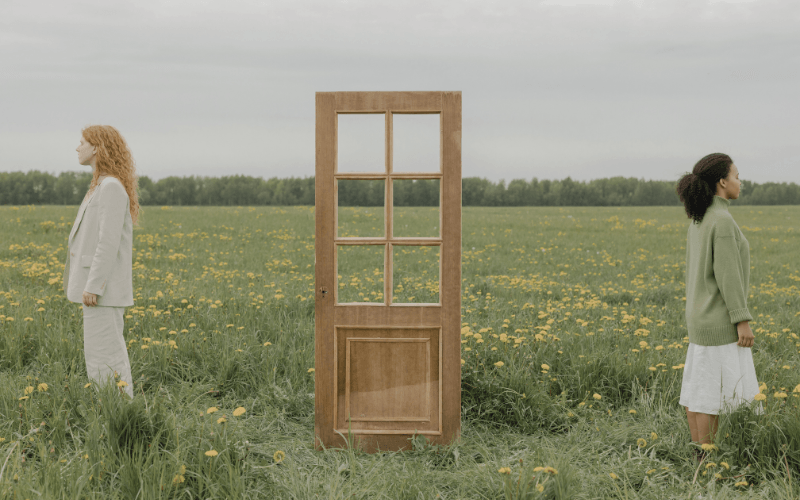
How We Get Here: A Story of Experience and Interpretation
Ziad K. Abdelnour said, “The hardest decision in life is whether to ‘walk away’ or ‘try harder’”. This statement often rings true. Let’s explore this further.
I have always been the type of person who chooses to "try harder." I tend to shoulder the responsibility and adopt the mindset that I should never give up or give in. I believe in finding a way forward, advocating for what I want, and fighting for the experiences I desire. I had hoped that this approach would eventually pay off. However, the truth is that there have been too many occasions when life has taught me that the “try harder” path often leads to disappointment. Instead of yielding the desired results, it tends to prolong the inevitable. This approach frequently results in a life filled with greater struggles, stress, and strain. Even after experiencing periods of happiness, sometimes lasting weeks, the reality often reverts to how it truly is: enduring life as it has always been or making the choice to walk away. I'm not sure if I'm just plain unlucky when it comes to these situations or if I'm often committing to things that I shouldn't be investing so much time and energy into. Upon reflection, it feels like I tend to make the wrong choices about what I should be trying harder at and what I should be willing to walk away from.
When unpacking this idea, starting with a personal journey is often the best approach. It allows for a cathartic process and makes the experience more relatable and significant in the context of your life. Engaging in journaling, whether written or video, can be quite helpful. This might come off more like a personal entry from my journal than a deeper analysis of the quote, and perhaps it is. However, one key lesson I've learned is that we can only view and perceive things from our unique perspectives and experiences.
Let's explore this idea further, aiming for a diplomatic approach enriched by emotion and experience, and get curious through the power of questions. How can you determine when to ‘walk away’ and when to ‘try harder’?
The best advice I can offer is to develop a clear understanding of what you are willing, or unwilling, to accept in your life.
Are you willing to accept more of the same, hoping that things will eventually change?
Are you prepared to go through the motions, trying your best, taking action, and seeing if your efforts yield rewards, particularly in relationships?
Are you no longer willing to accept the status quo?
Could you still be inclined to give it another shot, perhaps by setting clear boundaries and directives, and deciding to ‘try harder’?
You may choose to "try harder," but a crucial question still arises: who actually needs to try harder? Is it you who must put in more effort? If the other person in your relationship needs to step up, then your choice to "try harder" may ultimately be futile. Your willingness to make an effort cannot compel another person to do the same simply because you want to give the relationship another chance or allow it to evolve into something different from what it has been. Is it you, or is it someone else who really needs to make the decision to try harder or walk away?
As I write this, I am keenly aware that if you believe you've put in the effort and it still seems like you need to try harder, then consider that you might be the one who has settled. You may have been mistreated, walked on, made fun of, victimised, scapegoated, or experienced any other form of imbalance in your relationship. Reflection, particularly self-reflection, is genuinely the only way you will come to a decision about stepping left or right in your relationship. For everything I've discussed here, self-reflection is your best ally. It’s important to critically analyse your findings; this means observing the situation from an outside perspective without becoming attached to your emotions or potential outcomes. Detaching in this way will help you make a decision that best serves and upholds your values.
Parting Gift
As a parting thought, in the words of Iyanla Vanzant, “You cannot make someone love you the way you want to be loved. You simply observe the way they love and decide if you want to participate in it”. If you know in your heart that someone else’s way of loving does not align with how you wish to receive love, then for the sake of your self-respect, draw the line and walk away.
If this made you pause, nod, or quietly think “oh… that’s me”, you’ll probably like what we’re doing inside Shadowheart Circle, where we take self-awareness seriously but not ourselves.
Written by:Gemma Rose
Read More